

United Kingdom · Manufacturing & Supply Chain
You have three quotes on your desk. One is cheaper, one is faster, and one just feels right. None of that tells you which factory will still be answering your emails in month eight.
What this guide covers
Key Takeaways
- The cheapest quote rarely stays the cheapest once rework, delays and missed certifications are factored in.
- A reliable manufacturing partner should pass checks across seven areas: capacity, quality systems, IP protection, communication, MOQs, lead times and financial stability.
- A factory audit, even a remote one, catches risks that a quotation and a product photo never will.
- Your first call with a factory reveals more than its brochure. Ask about capacity, tooling and past client disputes directly.
- Certifications such as ISO 9001 are a starting filter, not proof on their own. Verify them independently.
Choosing a manufacturing partner is one of the biggest decisions a growing business makes. Get it right, and production becomes a quiet, dependable part of your operation. Get it wrong, and a single bad batch can wipe out a season of profit.
Most buyers compare manufacturers on price first. It feels rational. A lower unit cost looks like a straightforward win on a spreadsheet.
In practice, the cheapest quote is often the most expensive decision a business makes. Hidden costs show up later: rework, missed deadlines, failed compliance checks, or a factory that goes quiet the moment a dispute starts.
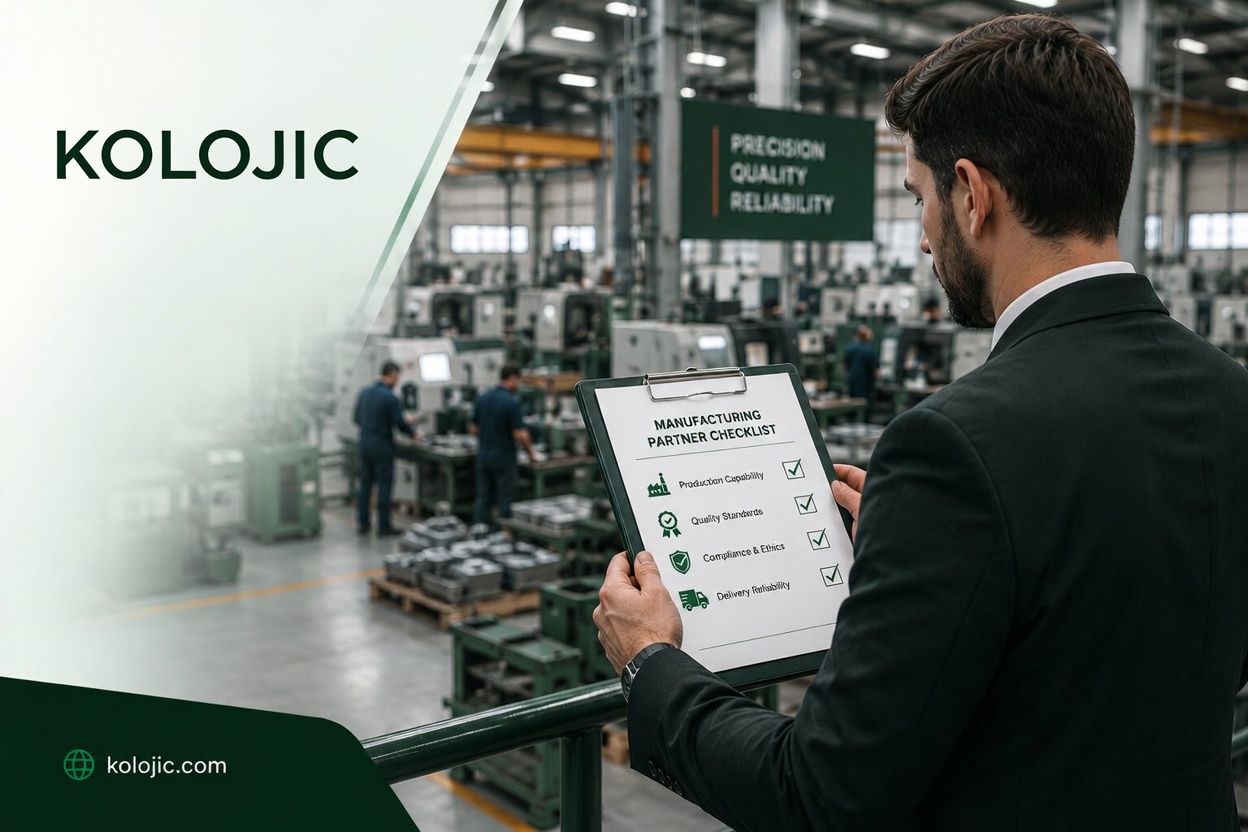
This guide gives you a practical framework for vetting a manufacturing partner before you sign anything. Use it as a working checklist during your next round of supplier calls.
1. Manufacturing Capacity
A factory that can produce your prototype cannot always produce your full order on time. Capacity is about whether a manufacturer can handle your real production volume, alongside every other client on their floor.
Why it matters
A factory running near full capacity will quietly push your order back the moment a bigger client calls. You find out during your busiest sales season, not before.
What to check and what to ask
- Current utilisation: what percentage of the factory’s capacity is already committed?
- Production line count and whether your order needs a dedicated line or a shared one.
- How they handle seasonal spikes, and whether your order gets priority or gets bumped.
Ask what percentage of their capacity your order represents. A factory where you are 2 percent of output has far more room to prioritise you than one where you are 40 percent.
Green flags: clear answers about spare capacity, a named production manager for your account, honesty about peak-season limits.
Red flags: vague answers about workload, reluctance to discuss other clients, no clear production planning process.
2. Quality Management Systems
Quality assurance and quality control are not the same discipline, and a strong manufacturing partner treats both as core to how they run production, not as a final inspection step.
Why it matters and the cost of ignoring it
Weak quality management shows up as inconsistent batches, silent substitutions of materials, and defects that only surface once a container has already left port. The cost of poor quality is rarely just a refund. It includes returns, reputational damage and lost repeat customers.
What to check
- ISO 9001 certification, verified directly against the certificate number, not just a logo on their website.
- In-process inspection points, not only a final check before shipping.
- Whether they welcome third-party factory audits or push back on the idea.
| Good Sign | Red Flag | |
|---|---|---|
| Manufacturing Capacity | Transparent about current utilisation and spare production lines | Vague, evasive answers about workload or other clients |
| Quality Systems | ISO 9001 verified independently, in-process inspections documented | Certificates that cannot be verified, inspection only at the end |
| IP Protection | Signs an NNN agreement without pushback, references past clients | Refuses an NDA or NNN, wants full designs before any agreement |
| Communication | Responds within a business day, English-speaking contact assigned | Days of silence, answers routed through a generic sales inbox |
| MOQs | MOQ matches your realistic order size and demand forecast | MOQ far above what you can sell, no flexibility offered |
| Lead Times | Realistic timeline including tooling, sampling and shipping | Unusually short quote with no buffer for delays |
| Financial Stability | Established trading history, transparent payment terms | Insists on full payment upfront, no verifiable trading history |
3. Intellectual Property Protection
Sharing a product design with a new factory is an act of trust. Intellectual property protection decides whether that trust is backed by anything enforceable.
Why it matters
A standard Non-Disclosure Agreement drafted for your home country often has no real power in an overseas jurisdiction. If you are sourcing from China manufacturing hubs, a Non-Disclosure, Non-Use and Non-Circumvention Agreement, known as an NNN, offers stronger protection than a standard NDA.
What to check
- Whether the factory will sign an NNN agreement enforceable in their local jurisdiction.
- Who owns the tooling and moulds once you have paid for them.
- Their track record with other clients’ designs, and whether they manufacture visibly similar products elsewhere.
Sending full technical drawings before any agreement is signed. Share only what is needed to get a quote, and gate the full specification behind a signed NNN.
4. Communication Speed and Transparency
How a factory communicates before you sign is the best preview of how they will communicate once something goes wrong.
Why it matters
Factory communication problems rarely start as major issues. They start as a two-day delay in answering a simple question, then stretch into weeks of silence once a real production problem appears.
What to check and ask
- Response time to your first three enquiries. Under 24 hours on business days is a reasonable baseline.
- Whether you get a named contact or a rotating cast of sales staff.
- How they have handled a past dispute. Ask for a specific example, not a general assurance.
Green flags: direct answers, willingness to get on a video call, proactive updates without being chased.
Red flags: generic templated replies, reluctance to speak by call, defensive answers about past problems.
5. Minimum Order Quantities (MOQs)
A Minimum Order Quantity, or MOQ, is the smallest volume a factory will produce per run. It needs to match your real demand, not the factory’s ideal batch size.
Why it matters
An MOQ set too high ties up cash in stock you may not sell for months. Product development budgets and tooling costs are sunk the moment production starts, so getting this number wrong is expensive twice over.
What to check
- Whether the MOQ is negotiable for a first order, even at a slightly higher unit price.
- How MOQ interacts with tooling costs. Some factories lower unit MOQ if you cover tooling upfront.
- Whether they offer a smaller pilot run before committing to full mass production.
6. Lead Times and Delivery Reliability
A lead time quote should cover the full journey from confirmed order to goods arriving at your door, not just time on the factory floor.
Why it matters
Production planning delays compound. A one-week delay in tooling becomes a missed shipping window, which becomes a missed retail season. Factories under capacity pressure often quote optimistic timelines to win the order, then slip once production starts.
What to check
- Full timeline broken down: tooling, sampling, mass production, quality check, and shipping.
- Their track record on past delivery dates, ideally verified with an existing client reference.
- Which Incoterms apply, since this affects who is responsible for delays in transit and logistics.
7. Financial Stability
A factory in financial difficulty can still quote well, sample well, and then fail mid-production. Financial stability is the check most buyers skip entirely.
Why it matters
If a supplier folds partway through your order, you can lose deposits, tooling investment and months of lead time all at once, with little recourse.
What to check
- How long the factory has been trading, and under how many different company names.
- Whether they request full payment upfront, which increases your exposure if something goes wrong.
- Basic trading history checks through a sourcing agent, consultant, or business registry in their country.
Where Risk Actually Enters a Manufacturing Deal
Risk climbs fastest at the decision points buyers skip under time pressure
How a Manufacturing Consultant Vets a Partner
The three phases Kolojic runs before a client signs a contract
Four Risks Hiding Behind a Good Quotation
The issues a price comparison alone will never reveal
IP Exposure
Designs shared before any enforceable agreement is signed
Quality Drift
Sample quality that quietly declines once mass production begins
Communication Breakdown
A responsive sales contact who goes quiet once problems appear
Financial Risk
A factory that fails mid-order, taking your deposit with it
The Exact Questions to Ask During Your First Factory Call
What does someone actively choosing a manufacturing partner need to know before the call ends? Use these questions directly, and note how confidently each one gets answered.
- What percentage of your current capacity would our order represent?
- Can you name three clients you have worked with for over two years?
- Who owns the tooling and moulds once we have paid for them?
- What is your average response time to a client enquiry?
- Walk me through what happens if a batch fails quality control.
- What is your realistic lead time, including sampling and shipping, not just production?
- Are you open to a third-party factory audit before we place a full order?
3 Signs You Should Walk Away From a Manufacturing Deal
1. They resist an NDA, NNN, or factory audit
A supplier confident in its own operation rarely objects to reasonable protection. Resistance to signing an agreement or hosting an audit is a signal worth taking seriously, not negotiating past.
2. Every question gets a vague or delayed answer
If simple pre-contract questions about capacity, certifications or lead times take days to answer, factor in how much slower answers will be once you are mid-production and something has gone wrong.
3. The price is dramatically lower than every other quote
An outlier-low quote usually means a corner is being cut somewhere: cheaper materials, reduced inspection, or a factory quoting capacity it does not actually have. Ask directly what allows them to price so far below competitors.
Choosing overseas sourcing over a domestic manufacturing partner can still make strong commercial sense. It simply raises the stakes on due diligence, particularly around supply chain reliability, import compliance and product marking requirements such as UKCA. The UK’s regulatory import requirements and the step-by-step import process on GOV.UK are worth reviewing before you commit to a supplier outside the UK.
This is where a structured framework earns its place. It turns supplier selection from a gut call into a repeatable process, one that a supply chain consultant can run consistently across every sourcing decision you make.
Frequently Asked Questions
How do I choose a manufacturing partner?
Evaluate potential suppliers across seven areas: capacity, quality systems, IP protection, communication, MOQs, lead times and financial stability. Request a factory audit before committing, verify certifications directly with the issuing body, and avoid choosing on price alone. A structured checklist reduces the risk of an expensive mistake.
What questions should I ask a factory?
Ask about current capacity utilisation, tooling ownership, average response times, and what happens when a batch fails quality control. Request references from clients they have worked with for at least two years, and ask directly whether they will accept a third-party factory audit.
How do I verify a manufacturer?
Confirm certifications such as ISO 9001 directly with the certification body rather than trusting a logo on their website. Check their trading history, request client references, and consider a third-party or remote factory audit before placing a full production order.
What is MOQ?
MOQ stands for Minimum Order Quantity, the smallest volume a factory will produce in a single run. It should match your realistic sales forecast. An MOQ set too high ties up cash in stock, while one set too low can push your unit price up significantly.
Should I source from China?
China manufacturing can offer strong capability and competitive pricing, but it raises the stakes on due diligence. An NNN agreement, verified certifications, and a factory audit matter more with overseas sourcing than with a domestic manufacturing partner, given the added distance and legal complexity.
What makes a good manufacturing consultant?
A good manufacturing consultant runs a structured, repeatable vetting process rather than relying on instinct. They verify certifications independently, coordinate factory audits, review contracts and Incoterms, and help you avoid the hidden costs that a quotation alone never reveals.
What is the difference between OEM and ODM manufacturing?
OEM manufacturing produces goods to your own design and specification. ODM manufacturing means the factory supplies an existing design that you brand as your own. OEM gives you more control and IP ownership, while ODM is typically faster and cheaper to bring to market.
Before You Sign With a Manufacturer
Before committing to a manufacturer, let Kolojic evaluate your potential manufacturing partner and identify hidden risks that could cost your business time and money.
Talk to Kolojic →